A website for businesses or even individuals is one of the most important tools for enhancing your digital presence. It ensures greater visibility on the internet, helps you build customer loyalty for your business, and serves as a showcase for your company’s achievements and capabilities, in addition to its use in marketing and sales.
In today’s topic, we’ll explore everything related to websites—from the concept and benefits to the most notable integrations between websites and other communication channels.
What Is a Website as a Concept?
A website is simply a space on the Internet where you can store information so that others can view it. This information can be personal, work-related, or about topics that are important to the person who created the website. Depending on the type of website, visitors can make purchases—as on e-commerce sites—or study, chat, or engage in other activities for which a website might be created.
Website Elements
So, what does a website consist of?
Knowing the answer to this question is essential for understanding how this technology works and for being able to launch your own website. In the following points, we’ll help you discover its components.
Web Hosting
Website hosting is a service provided by a hosting provider to supply the digital infrastructure that a website owner needs to store, maintain, and publish their website on the Internet. In order for your website to be accessible on the Internet, its data must be stored on a high-performance central computer called a “web server.”
Note that the hosting provider’s role is not limited to providing the digital infrastructure; it also includes handling the technical aspects of website maintenance, such as implementing security measures, ensuring the servers run continuously, and making sure visitors can access your site without any interruptions or issues.
Domain Name
A domain name is the unique name used to access your website. It is the address that a visitor types into the browser bar to go directly to your site.
Here, you should choose a domain name that is easy to remember and appealing to visitors, to help them return to your site easily; this is an essential step in building your digital presence. Therefore, choosing the right domain is one of the most important stages in the process of creating your website, as it represents your identity on the web and reflects your brand’s character.
There are tools available to verify that the domain name you’ve chosen is not already in use by another website owner. For example, the Namechk tool or the dnschecker tool, as well as other similar tools, can help you verify the availability of a domain name.

Web Address (URL)
A hyperlink or Uniform Resource Locator (URL) is a virtual address for any unique resource on the Internet. This resource can be a web page, an image, a video, or even a document. A URL typically consists of several parts, including: the protocol (such as https://), the domain name (example.com), the extension (such as.com or.org), and the path, which specifies the location of the page or file within the website.
In other words, a URL serves as a detailed address that directs users and browsers to the desired content on the Internet.

Design
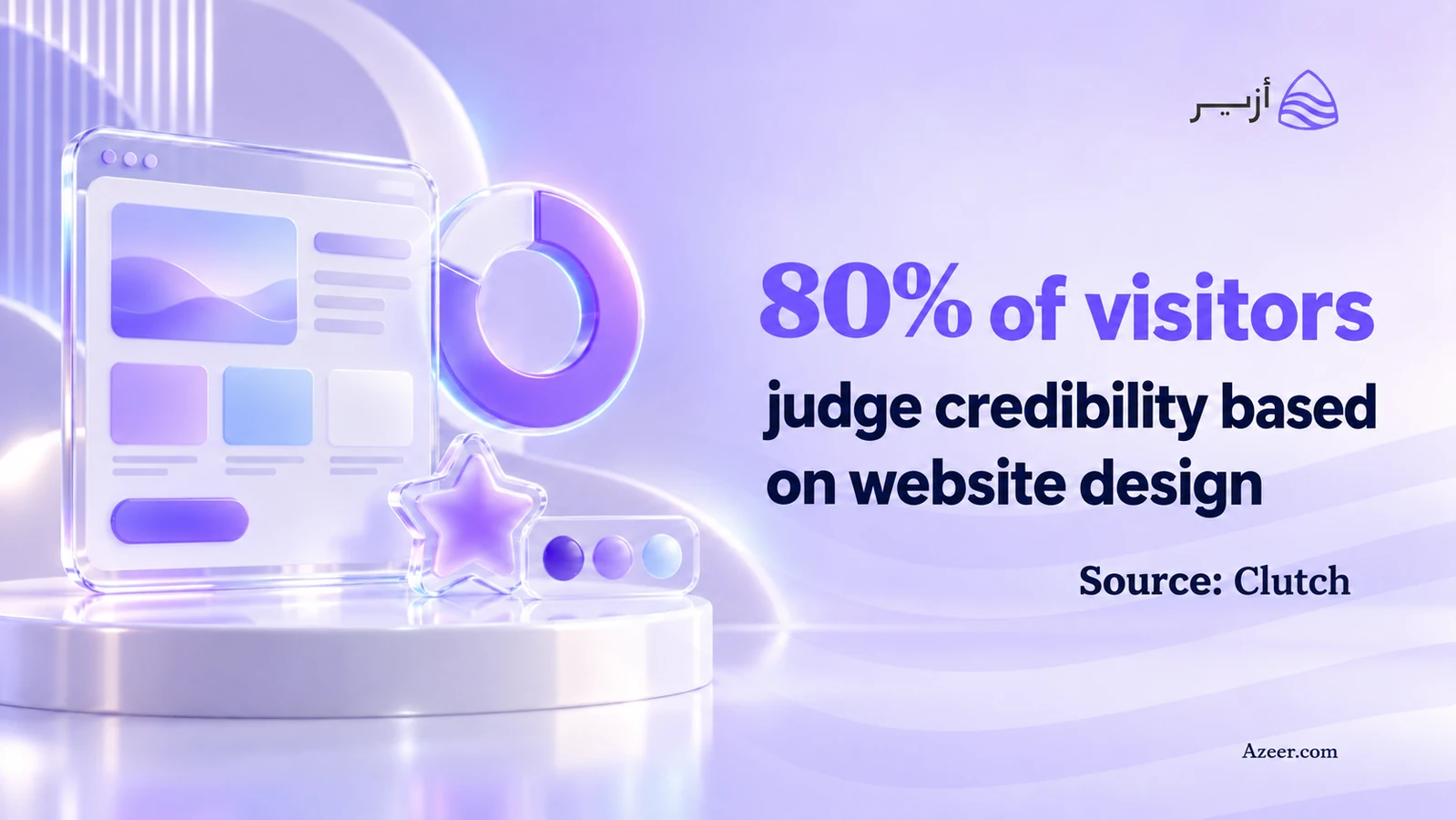
Statistics released by Clutch indicate that 80% of visitors assess a business’s credibility based on its website design, making a cohesive design one of the most important pillars of any online business’s digital presence.
Fortunately, creating a professional design no longer requires a significant initial investment. There are many options suitable for beginners, such as using ready-made templates designed by experts, as is the case with the Zid and the Salla and even Shopify, which provide e-commerce entrepreneurs with ready-made templates to build their websites. You can also take advantage of the AI-powered design features available in modern website builders.
Website Content
Website content is the information you post on your website with the aim of educating, guiding, or influencing visitors. This content can take many forms, such as text, images, videos, or audio recordings.
Like design, the primary role of content is to attract visitors and keep them engaged for as long as possible, thereby increasing the likelihood that they will return to your site. Content is also considered the beating heart of search engine optimization (SEO) for your website’s pages; writing optimized articles helps improve your site’s ranking in search engine results pages (SERPs).
Benefits of Your Company’s Website
We’ve explored the concept of a website, and in the next part of today’s topic, we’ll examine together the reasons why you need to launch a website for your company.
A Mark of Professionalism
A well-designed website enhances your brand’s value, especially when it’s backed by an easy user experience, a polished design, and fast performance on both mobile devices and the visitor’s computer. Customers will see you as someone who cares about your work and all its details, making them more likely to engage with you and invest in your products or services.
Keep in mind that customers will search for your brand online before deciding to do business with you. For example, if you specialize in computer sales and your website appears at the top of a customer’s search results for computer products—and they have a positive experience on your site—this will increase the likelihood that they’ll go from being a potential customer to an actual customer.
Brand Awareness
Your website reflects your brand identity and helps visitors recognize you and understand your business values. Every element of your website—from the fonts to the writing style—is, in fact, an expression of your personality and a factor in shaping your identity in the minds of your audience.
This is where the importance of consistency in visual presentation and content comes into play—to set you apart from competitors and expand your reach beyond your local market. With a strong and clear identity, your brand’s messages become more effective at reaching and influencing your target audiences.
24/7 Access
If you’re in any type of business, launching a website that serves as your online store is the step that gives you 24/7 access to your customers. At any time of day, customers will be able to visit your online store—they can browse products, add them to their shopping cart, choose their preferred payment method and shipping option, and then confirm the order—all without any intervention on your part.
Customer Benefits
One of the most effective ways to build trust with your customers is to provide them with useful content related to your field without directly urging them to buy a specific product within that content. This can be achieved on your website through the articles you publish; this article, for example, which you’re reading on the “Azeer” blog, is a practical example of this.
By providing content in this way on your website, you’ll become the first place customers turn to when they want to find out anything about your area of expertise. Consequently, when a customer wants to sign up for a service you offer or purchase one of the products you sell, they’ll come to you automatically and without hesitation.
Flexibility in Optimization
A website isn’t a static, unchangeable entity that remains fixed regardless of audience interactions; rather, you can continuously improve it to ensure it remains relevant to your audience’s needs and interests—whether in terms of content, design, or navigation. These steps help you improve the user experience based on real data, and when customers see that you consistently solve their problems, it creates a very positive impression, turning them into loyal customers for your company.
Content Control
When you own a website, you have complete control over its content, unlike social media platforms that impose restrictions such as character limits (as on X), algorithm changes that affect content reach, or posting limits. A website gives you extensive freedom to control your digital experience.
All you need to do to build a presence and engage with your customers is to comply with legal regulations—in other words, ensure your business is legitimate. It also improves search engine optimization (SEO) by analyzing the keywords your customers search for and strategically placing them on your website, which prompts Google’s algorithms to rank your site at the top of search results for those customers.
Landing Pages
These are among the most powerful tools that enable your website to help you increase conversion rates. Landing pages are created to guide visitors along a specific path that serves one of your marketing goals without any distractions. They consist of supporting elements such as compelling headlines, persuasive copy, clear call-to-action buttons, and supporting images—all working in harmony to guide the user toward the desired action.
These pages can be created for various purposes, such as collecting customer data, conducting customer surveys on specific topics, completing purchases, and other uses.
Website Marketing Methods
Having a website gives you many great options for marketing your brand, and in this section of the article, we’ll explore the most prominent marketing methods you can use through it.
Google SEM Advertising
Marketing through Google Ads is the paid aspect of search engine marketing. After you’ve selected the most relevant keywords that boost your visibility to customers, you can increase those visibility opportunities by launching an ad campaign targeting a set of these keywords. Here, you pay to have your website appear at the top of search engine results pages (SERPs) as featured ads.
The order of these ads is determined through an auction system in which advertisers compete for the keywords that users search for. When a user enters a specific search term, sponsored results are displayed first based on the ad’s relevance, content quality, and bid price.
Paid Social Media Advertising
Through your business accounts on social media platforms such as Instagram, or Facebook, or Messenger, or X and other platforms. You can launch an ad inviting your target audience to visit your website, whether to make a purchase or to achieve other goals you want to accomplish.
First, you need to select the right target audience. Social media helps you specify the age group, gender, geographic location, and occupation of your target audience—and even the type of cell phone they use and the times you want your ad to run.
Email Referrals
Email marketing is considered one of the most important elements of successful digital marketing strategies, and here you can achieve remarkable integration between email and your website. By having a list of email addresses for customers who want to receive regular updates from you, you can launch a campaign that helps you repeatedly re-engage current visitors with your website. This ongoing engagement leads to higher-value conversions, improved win rates, and increased lifetime value (LTV).
Influencer Marketing
With the proliferation of content creation across various social media platforms, influencers have become capable of persuading their followers to do many things, and the likelihood of followers responding to them is extremely high. Therefore, as a business owner, you can engage in influencer marketing by reaching out to an influencer—provided their content is relevant to your business—and asking them, for example, to try out one of your products and include a purchase link to your website in the comments for their followers. This approach can significantly contribute to increasing your conversion rate.
Partnerships with Other Brands
With the rapid evolution of the digital world, brand collaborations have become one of the most effective ways to increase online visibility and reach a wider audience. This type of collaboration, also known as strategic partnerships or co-branding, is based on a simple principle: two or more brands join forces to achieve mutual benefit by promoting each other.
Partnerships can be implemented in several ways, such as: launching joint marketing campaigns targeting a wider audience; offering special promotions or discounts through the collaboration; creating joint content on social media; or even cross-promoting content within the body of articles each party publishes on their blog.
These partnerships not only help raise brand awareness but also boost credibility, as the public sees a collaboration between trusted brands that share the same values or interests.
Examples of Website Integrations
The integration and connectivity features you implement on your website can significantly improve your business and ensure you reap multiple benefits. In this section of our article, we’ll review a number of examples.
Integration with Messenger
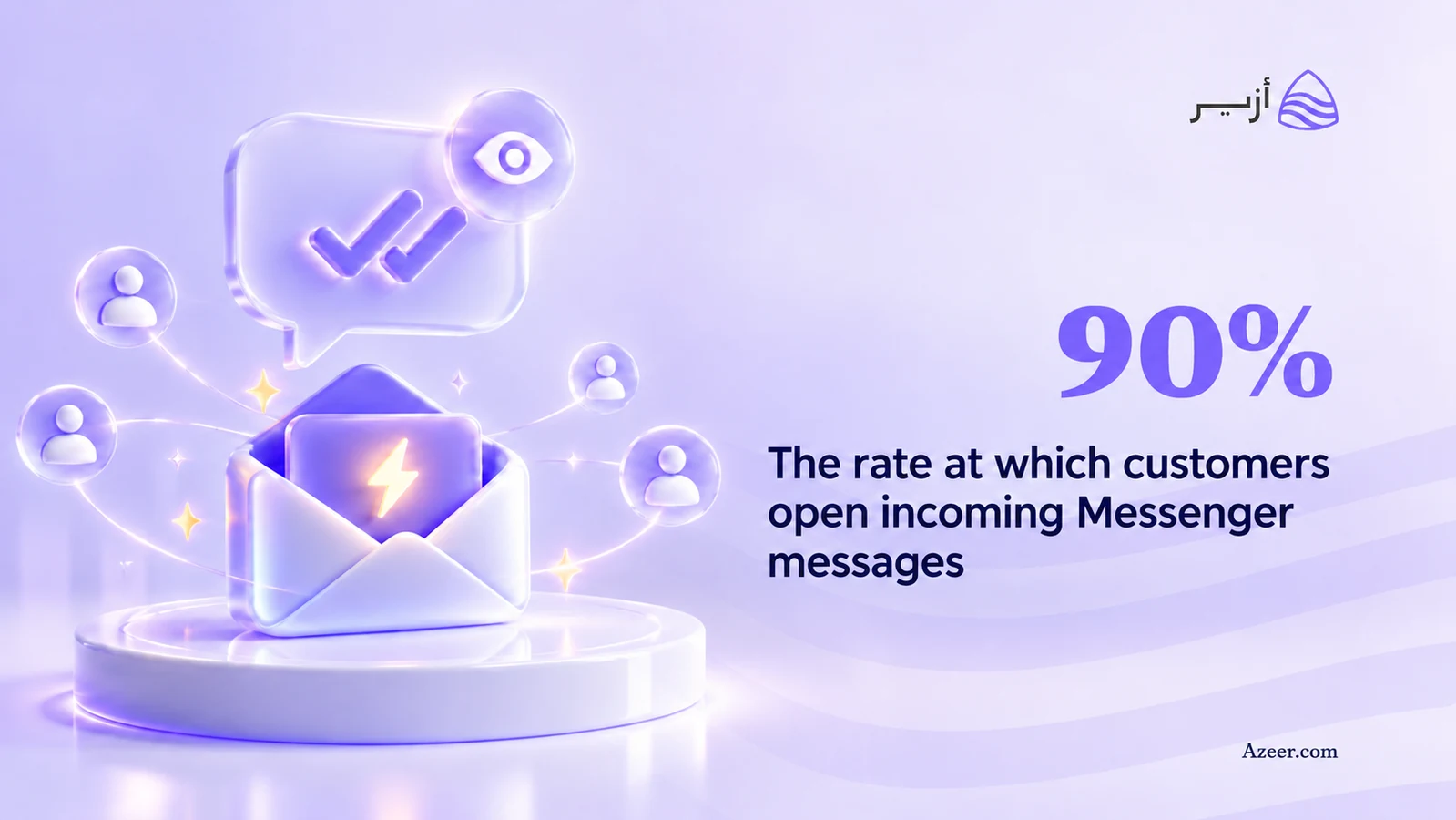
With a 90% open rate for messages received via Messenger and 7.60 million users in the Kingdom, this social media channel stands out as one of the top integration options for your website.
Adding Messenger to your website can be a strategic move for anyone seeking to enhance the customer experience and increase sales. Messenger provides an immediate and direct channel for interacting with customers. By integrating Messenger with your website, your brand can automate communication through an intelligent chatbot that offers round-the-clock support and converts conversations into real sales opportunities.
Integration with Call Center
This integration can help you in many ways. For example, you can use the customer data collected through your website for telemarketing campaigns, to reach out to customers who prefer phone contact and gauge their satisfaction with service quality or the shipping process, or to follow up on any complaints they’ve filed.
On the other hand, customers who wish to contact you by phone will find an option available that allows them to do so directly, and this will certainly help improve your brand image among this group of customers and increase their satisfaction with your business.
Integration with Telegram
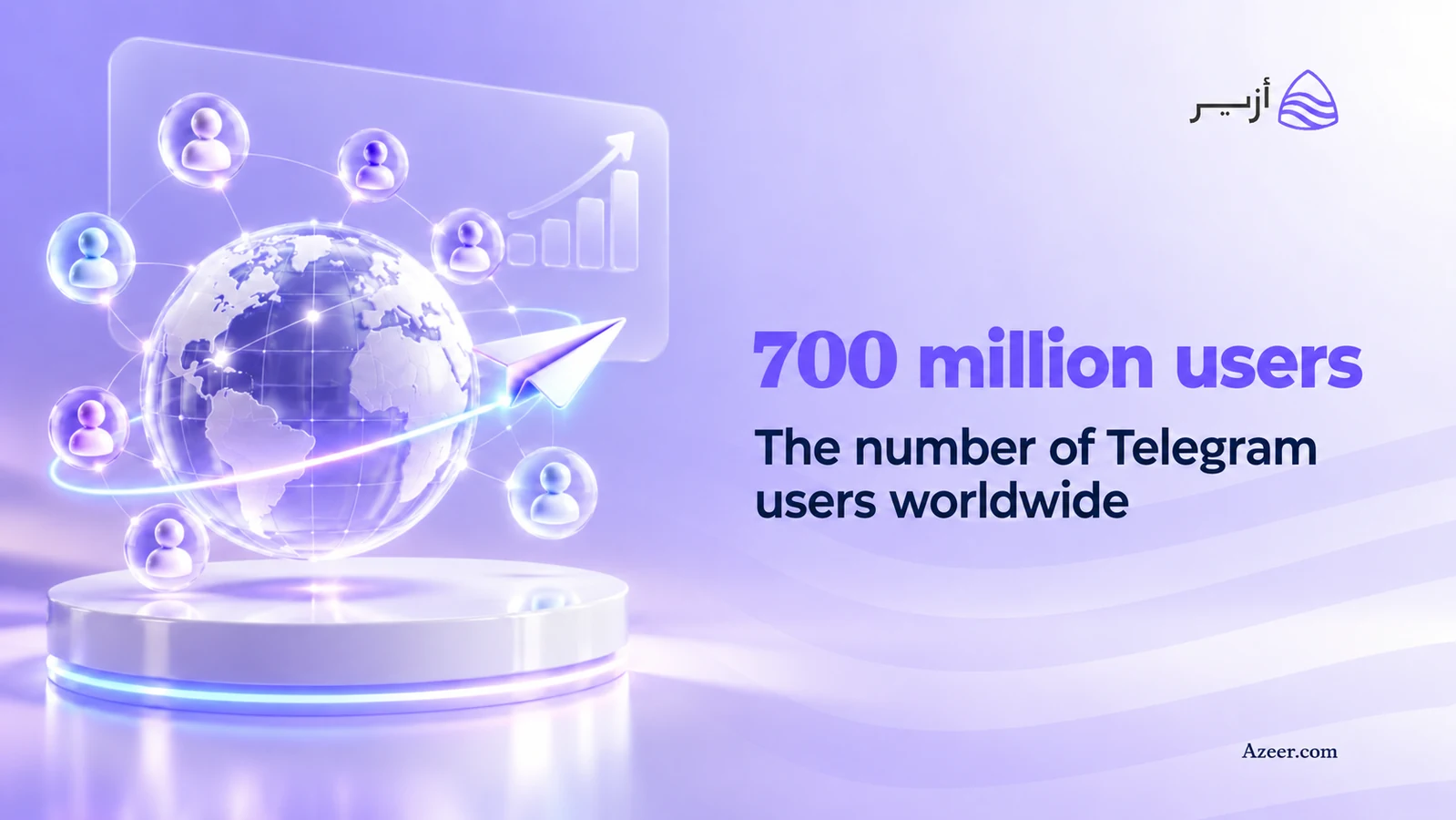
Did you know that the number of Telegram users worldwide has reached over 700 million active users?! That’s a huge number of customers—I wouldn’t recommend ignoring them. You can use Telegram as a way to engage with your customers—for example, by sharing up-to-date information about your products and services, relatively long videos showing creative ways to use them, and by receiving their complaints around the clock through a Telegram bot.
Conclusion
Azeer has successfully completed numerous integrations with e-commerce websites and online stores, which has earned us the trust of platforms like Zid and Salla, who rely on us to provide WhatsApp API for those launching online stores through them. You can now get the integration you’re looking for between your website and WhatsApp through us. Book your free consultation session, and join Azeer on the path to success.
And if you want a call center service: Powerful, easy to operate, and low-cost, yet highly efficient. You’ll find what you’re looking for here at Azeer. : Contact us: Leave it to our team.
Frequently Asked Questions
What is the difference between a website and a web page?
A website is a collection of interconnected web pages and visual content that work together to build your digital presence and increase your brand’s visibility online. A web page, on the other hand, is just one part of a website, such as the home page, the products page, or the contact page.
Is it possible to create a one-page website?
Yes, a website can consist of just one page (a one-page website), featuring all the essential information in a concise and seamless manner without the need for subpages.
What is the most-visited website in the world?
Google is the most-visited website in the world, receiving approximately 175 billion visits per month.
How many visitors does Google get each month?
Google's website receives approximately 9.01 billion visitors per month, making it the most popular website in the world.