After years of being accused of falling behind the artificial intelligence wave led by OpenAI, Google, and Anthropic, Meta enters 2026 with its strongest product momentum since the launch of the Llama series. Its developments range from the new Muse Spark model and its entry into cloud computing through Meta Compute to a major privacy controversy surrounding an AI image-generation tool on Instagram.
Meta has offered a vivid example of both the ambitions and the challenges facing today's AI industry. This article reviews the main developments in Meta AI this year, from products and infrastructure to the ethical controversy surrounding them.
Key Concepts in Meta's Artificial Intelligence
The introduction mentioned terms such as Llama and Muse Spark. Naturally, these names raise questions about what they mean and how they influence the development of Meta's artificial intelligence. This section explains the key concepts associated with Meta AI.
First: Llama
Llama stands for Large Language Model Meta AI and belongs to the family of large language models developed by Meta. It works behind the scenes to power Meta AI and other Meta products.
One of the main advantages of these LLM models, first introduced in 2023, is that they are largely open source. Most model weights are available for researchers and developers to download free of charge, unlike closed models such as those used in ChatGPT.
Since this LLM family was introduced, it has gone through several releases: Llama 2, Llama 3, and finally Llama 4. The latter can process text, images, and video thanks to its Mixture of Experts architecture.
Second: Muse Spark
Before discussing Muse Spark itself, it is important to understand how it emerged. The story goes back to a process that began last year and culminated on April 8, 2026, when Meta owner Mark Zuckerberg launched the research unit Meta Super Intelligence Labs, known as MSL. Its purpose was to lead Meta's advanced AI efforts under the direct supervision of Chief AI Officer Alexandr Wang.
MSL was regarded as the new organizational umbrella replacing the earlier approach to developing Llama. It is responsible for creating the next generation of models, most notably Muse Spark.
Internally at Meta, Muse Spark was given the name Avocado. It became MSL's latest language model, representing Meta's second generation after Llama and focusing on coding and agentic tasks.
The relationship between these terms can be summarized as follows: MSL is the organization responsible for development within Meta, while Muse Spark is its latest model and the successor to Llama. Meta AI is the commercial name of the AI assistant used by end users.

Meta AI and the Shift from Open Source to Proprietary Models
Meta is ultimately a for-profit company. Its fundamental aim in entering the AI market is to outperform competitors, secure a strong position with end users, and generate profit. With that objective in mind, Meta developed its AI products by moving from Llama's open-source era to the new structure represented by MSL.
The transition from Llama to MSL caused disruption within Meta's AI division because it required restructuring. Wang and Zuckerberg rebuilt the AI team almost from scratch, while a separate Applied AI unit was established for data-collection tasks.
This raises a question: did all these restructuring steps make sense?
The answer can be yes. Meta changed its AI strategy completely and entered the era of proprietary models. This means that model weights would no longer be published: the models remain on the company's servers and cannot be downloaded and modified. Instead, developers receive paid access through an API and pay according to usage.
Meta therefore moved from providing an open technical resource for the community to selling AI services for profit, as OpenAI and Anthropic do. Working in a different way naturally requires changes to the people and structures responsible for delivering that work.
Muse Spark and Competition in the AI Market
Meta considered the Muse Spark model released in April an important step toward superintelligence. Reports tracking its performance place it between Google's Gemini 2.5 and Gemini 3.0. This would make it stronger than Llama 4, which did not achieve that position, while still falling short of the leadership Meta is targeting.
The version of Muse Spark released in April was not available to everyone. Wang initially chose to test it with selected partners. After it gained momentum, he released an updated version in early July 2026 called Muse Spark 1.1, describing it as the company's strongest model yet for agentic tasks and coding.
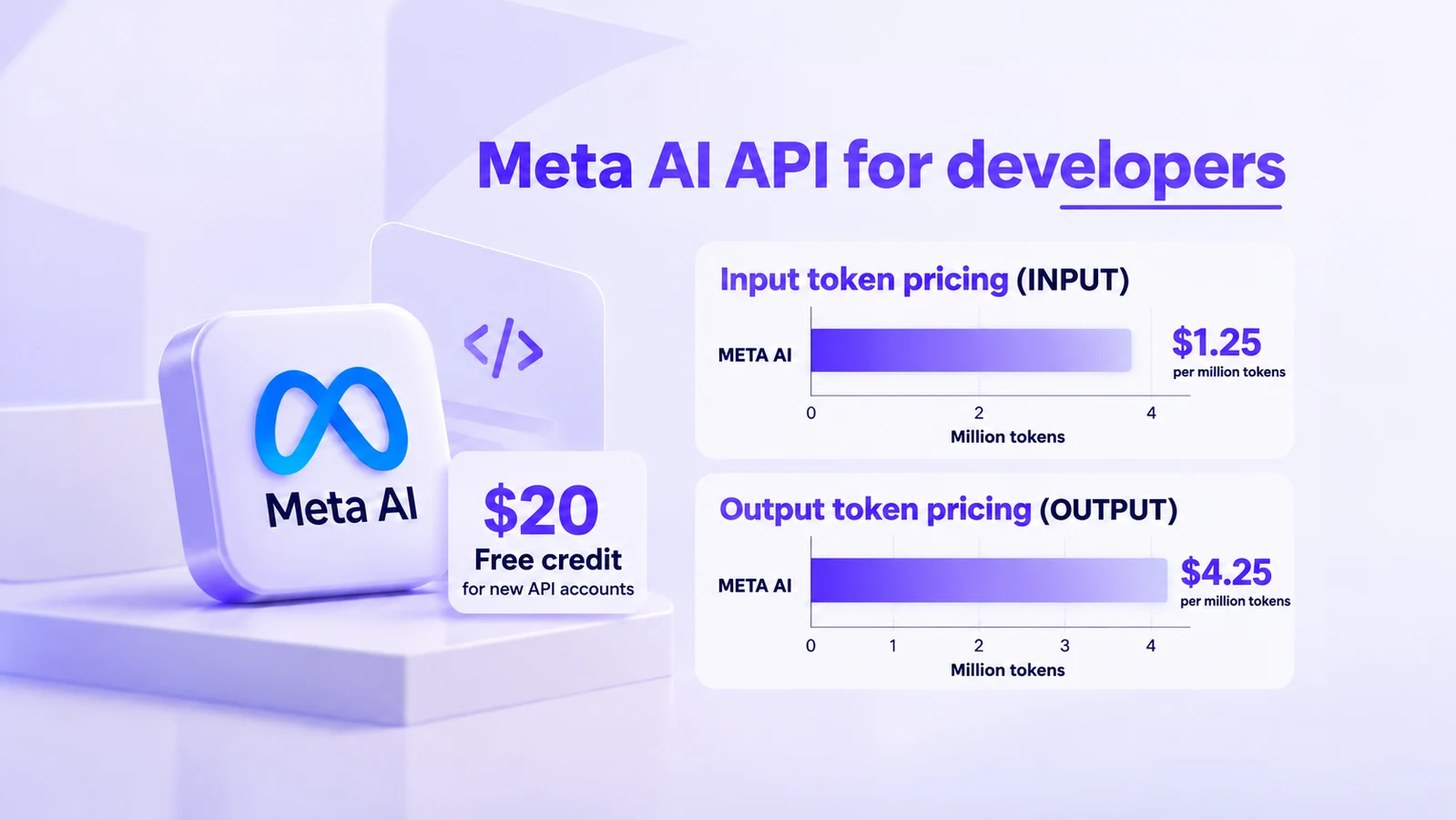
This time, Meta made an API available to developers through a public portal. Wang described its pricing as highly competitive with Anthropic and OpenAI: $1.25 per million input tokens and $4.25 per million output tokens, with $20 in free credit for each new API account.
According to Meta, Muse Spark 1.1 outperforms Google's latest Gemini releases on coding and reasoning benchmarks, and exceeds earlier OpenAI and Anthropic models in some specialized areas. However, the company did not publish a direct comparison with those two competitors' latest releases. Other reports acknowledged that the model still trails the newest Anthropic and OpenAI models on some specialized coding tests.
For visual content, Meta Super Intelligence Labs also introduced its first dedicated image- and video-generation models under the names Muse Image and Muse Video. It is also developing a model called Mango to compete with OpenAI's Sora and Google's Veo, although no official release date has been announced.
The Expansion of AI Across Facebook and Instagram
In June 2026, Meta launched AI Mode for Facebook search. It uses Meta AI to extract answers from public posts across the platform, including groups and Reels. Users can ask questions in natural language and receive an answer based on what people are actually discussing. This followed the quiet launch, in the previous month, of Forum, a Reddit-like app featuring an AI-powered Ask tab.
These features add to earlier updates, including animated profile pictures introduced in February, automatic replies to buyer messages on Facebook Marketplace in March, and an AI assistant for creators that recommends posting times and summarizes audience comments. Together, these releases reflect a clear strategy: using AI tools to keep users engaged while diversifying revenue, including global Facebook, Instagram, and WhatsApp subscription packages starting at $3.99 a month.
Muse Image and the Instagram Incident
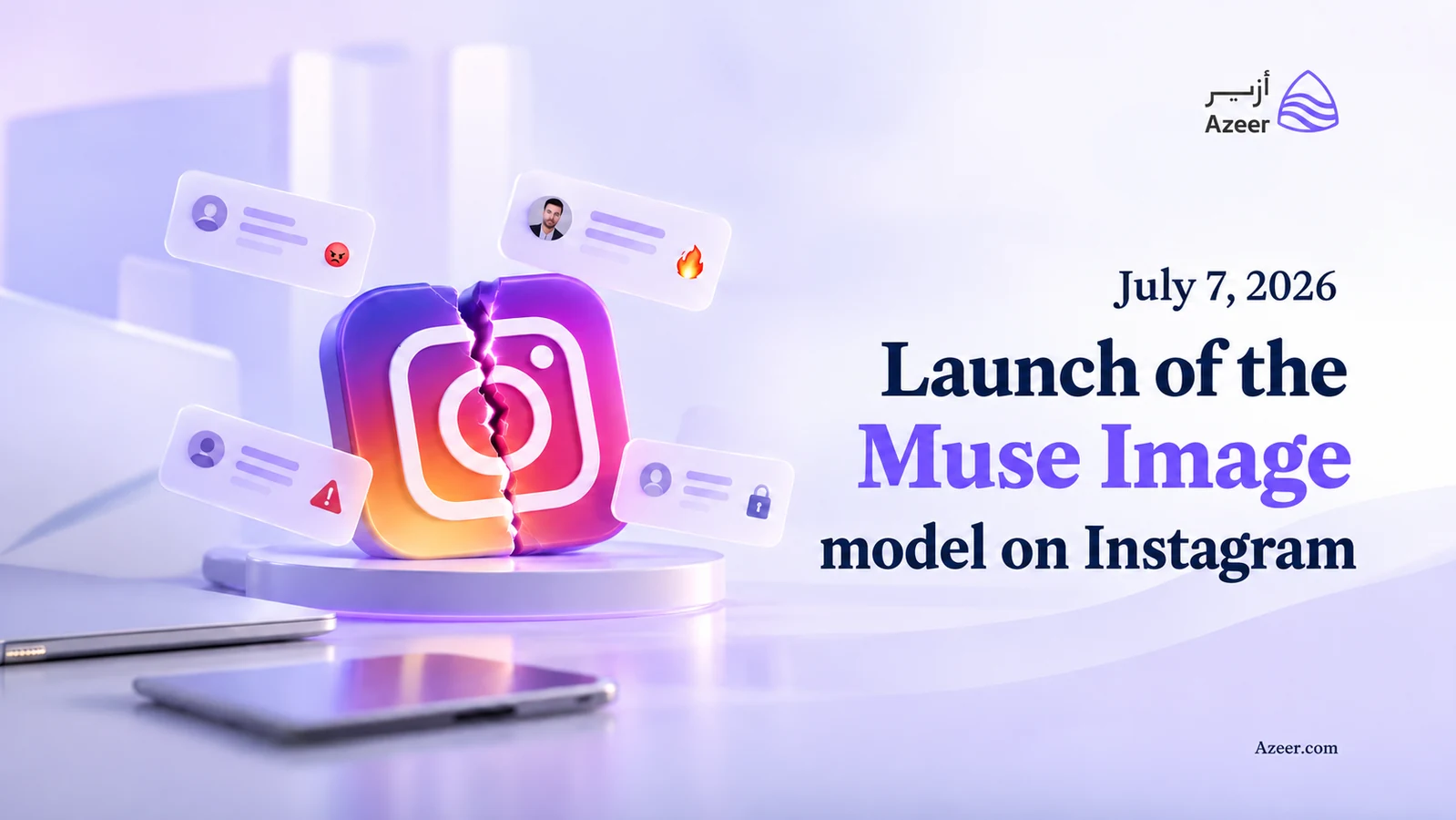
The launch of Muse Image on Instagram became one of the most controversial chapters in the Meta AI story this year. Announced on Tuesday, July 7, 2026, as a creative partner, it allowed users to tag any public Instagram account belonging to an adult and incorporate that person's features into their designs. Widespread criticism followed within days.
The central issue was that the feature automatically included all public-account owners without notifying them, offering an opt-out instead of seeking explicit consent beforehand. Account owners also received no notification when their images were used to create AI-generated content.
The rights organization Public Citizen described this as a blatant invasion of privacy, while the American actors' union SAG-AFTRA urged its members and all Instagram users to opt out immediately.
Meta responded with unusual speed and stopped the feature entirely on Friday, July 10, less than a week after its launch. In an official statement reported by Reuters, the company said its intention had been to provide a useful creative tool and give people control over whether their public content could be referenced this way. It acknowledged feedback that the feature had missed the mark and said it was no longer available.
Artificial Intelligence from Azeer: Solutions Tailored to Your Business
Artificial intelligence has become an essential part of business today, prompting us to explore specialized solutions that can be deployed within your company. But does the tool you use understand the specifics of your business, and does it work exactly as you need?
A tailored solution such as Azeer AI Agent gives you detailed control over how AI interacts with your customers. You can upload PDF files containing your business policies, including exchanges, returns, delivery, payment methods, and frequently asked questions, through Data Source. In Guidance, you can define the agent's scope through Rules; its response length and tone through Basics; when and how conversations should be transferred to your team through Handover and Escalating; and how to deal with unresponsive customers through Session and Closure.
Whether you prefer to build the agent yourself through AI Custom or leave the task to the Azeer team through Native AI, the choice is yours. In other words, AI does not replace an understanding of your business: it works better when it is built precisely around it. Explore how Azeer's AI solutions can help your business. Book your free consultation and speak with our team.