The marketing funnel represents the solution that companies resort to in order to attract the audience and gradually convert them from a casual visitor to a loyal customer, using smart methods that appeal to reason and emotion.
So what is the marketing funnel for companies? Does this funnel have different types, or does it have a specific, fixed form in all cases? And how can it be implemented in the best possible way? You will find the answers to these questions in the following lines of our topic for today.
Definition of the Marketing Funnel
The marketing funnel represents the customer's journey with a business, from their initial exposure to the brand until they reach the stage of brand loyalty. Its importance lies in helping businesses determine the appropriate way to address the customer based on their current stage within the sales funnel.
For example, if you own an online store, the way you target customers who are discovering your online store for the first time will certainly differ from customers who have shopped at your store 10 times before. This is where the marketing funnel comes in, helping you craft a marketing message that suits each customer.
Stages of the Marketing Funnel for Companies and Businesses
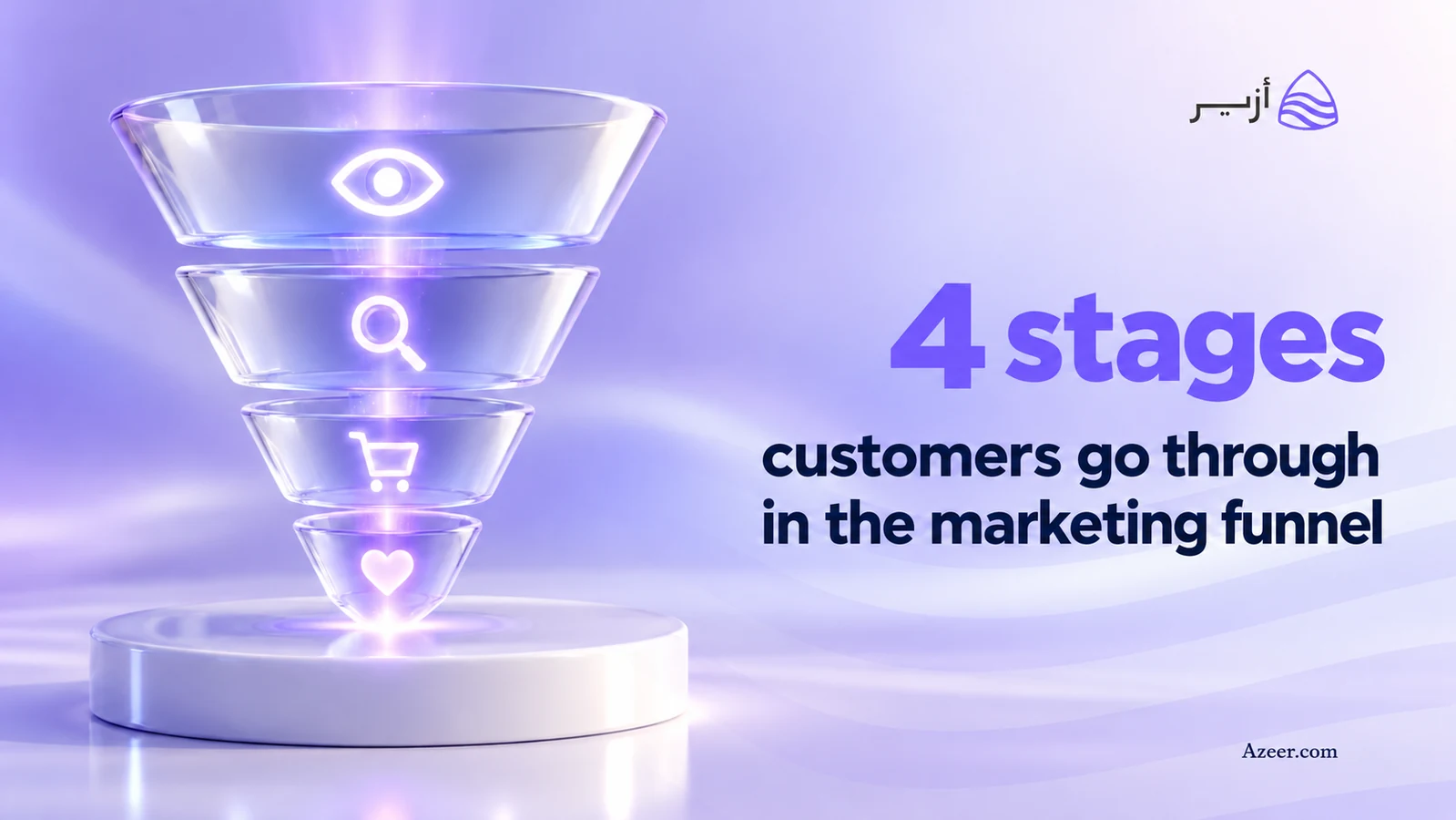
The traditional marketing funnel, which most companies and businesses rely on, consists of four stages. Let's explore them in the following points.
Brand Awareness
Brand awareness is the first stage of the marketing funnel for any business or organization. At this stage, the customer becomes familiar with the business's name, style, communication methods, message, and the solutions it offers to customer problems, whether through specific products or services.
During this stage of the marketing funnel, the business begins to increase its visibility to the customer in various ways, whether through content marketing, social media campaigns, television, or other means. Influencers The primary goal here is to attract the attention of the target audience and encourage them to search for the product or service and learn more about it.
Interest
The second stage of the marketing funnel. Here, the customer begins to ask for more details about the product or service, such as its features, delivery locations, payment methods, and return policies. He begins to compare your products or services with what competitors offer in order to know who is more capable of meeting his needs and solving the problem that makes him need the product or service.
During the interest phase, the customer can read reviews from those who have previously dealt with your brand and consider the ratings your brand's social media accounts have received. Customer Reviews reviews from those who have previously dealt with your brand and consider the ratings your brand's social media accounts have received.
Conversion
This stage of the marketing funnel is also called the decision phase. Here, the customer has become well-acquainted with the brand, compared it to competitors, and understood the key features that make it attractive. They have reached the point where they can make a purchase decision. Brands can launch offers with significant discounts or make the purchase process easier than competitors to encourage the customer to make a decision.
Brand Loyalty
Here, the customer has many positive experiences with the business, making them their first choice when they want the product or service. They automatically go to the business's social media accounts, mobile app, or website to make purchases, or they visit a branch to buy.
Other Types of Marketing Funnels
Besides the traditional marketing funnel we discussed earlier in today's article, there are other forms marketers can use to build marketing funnels. Let's explore them below.
The Basic Funnel
In this case, the marketing funnel goes through three stages. The first is the top of the funnel (ToFu), where the target audience recognizes the pain point that your business can address. The second is the middle of the funnel (MoFu), where the customer explores options before making a purchase decision. Finally, the bottom of the funnel (BoFu) is where the customer makes the purchase.
The basic marketing funnel can be more suitable for small and medium-sized businesses, as it keeps things simple and easy to track. It's also ideal for novice marketers as they gain more experience in business marketing.
Detailed Marketing Funnel
The detailed marketing funnel is very similar to the traditional marketing funnel, including the stages of brand awareness, interest, conversion, and brand loyalty. However, the difference lies in the addition of a fifth stage: word-of-mouth marketing. In this stage, customers begin promoting your brand to their friends and acquaintances, encouraging them to trust you and do business with you based on their positive experience.
The Difference Between a Sales Funnel and a Marketing Funnel
The sales funnel and the marketing funnel are not the same thing, but they can work together in parallel and complement each other to achieve business goals. In this section, we will explore the differences between the sales funnel and the marketing funnel.
First: The Marketing Funnel
In previous sections of today's topic, we learned about its definition and stages. It falls under the responsibility of the marketing team within an organization or business. The goal of the marketing funnel is to attract a broad segment of the target audience and prepare them for the purchase process through awareness, interest building, and desire development.
The marketing team can use various methods for this, such as paid advertising, content marketing, influencer advertising, video advertising, and many others. Marketing Methods.
Second: The Sales Funnel
The sales funnel can be defined as the path a customer takes from becoming aware of a product or service to making an actual purchase. This funnel is the responsibility of the sales team, working in conjunction with the marketing team. The sales team begins by contacting the customer, presenting the services or products, negotiating prices, closing the deal, and then providing after-sales service.
The sales process may require phone calls or meetings with the client, either at the company headquarters or remotely, until the sales team ultimately achieves its goal and successfully closes the sale.
The difference between working in the sales funnel and working in the marketing funnel can be illustrated by the following example. Let's assume we have a real estate company whose marketing team launches a campaign offering clients an e-book about real estate investment opportunities in a new city, in exchange for the client providing the company with their mobile phone number and email address.
Once this data is obtained, the marketing team's work ends, and the sales team begins working in parallel to convince the customers whose data was obtained to make investments in the real estate sector through the company that launched the marketing campaign.
Methods for Measuring the Success of Your Marketing Funnel
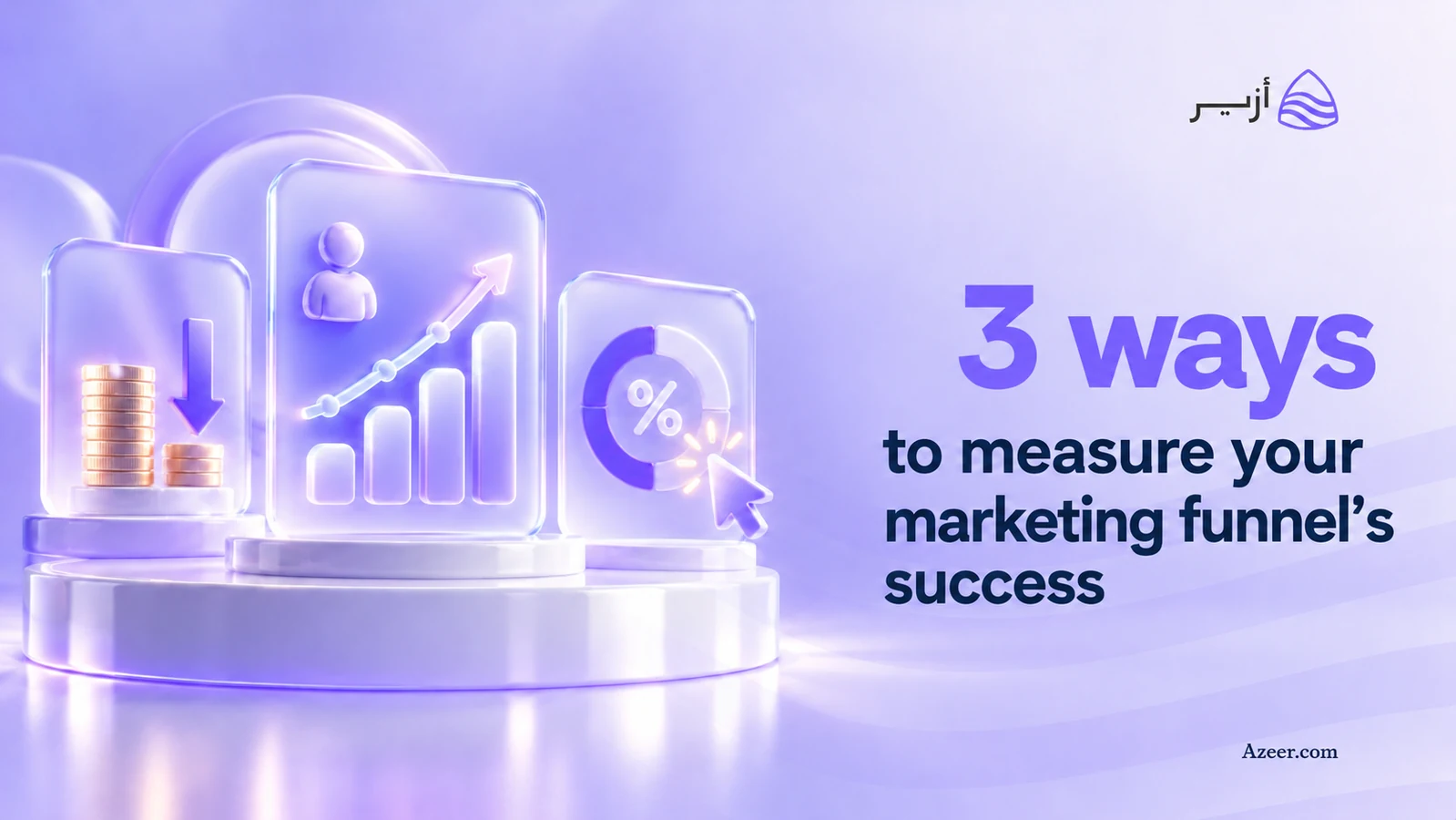
To assess your company's marketing funnel efforts, several metrics can help. Let's explore them in the next section.
Cost Per Acquisition (CPA)
This marketing funnel metric aims to determine the amount your company spent to acquire each new customer. Cost per acquisition (CPA) is typically used to analyze paid advertising on social media platforms and Google Ads.
Customer Lifetime Value (LTV)
This metric shows businesses the ongoing value a customer brings from their first subscription to the company's services until now. It's particularly suitable for subscription-based television channels, but it's also applicable to e-commerce stores, where a customer's purchases, such as their first registration on the website, can be measured. This applies to similar businesses.
Conversion Rate
Conversion rate can be used to measure the number of email newsletter subscriptions over a specific period, the number of visitors to a landing page on your website, or the number of clicks on an advertisement launched by your business.
Conclusion
At each stage of the marketing funnel, your company will need to choose the best marketing channels for your business and deliver the marketing message that achieves your goals with your target customers. The Azeer team can provide you with helpful tips. Book your free consultation session now! Let us help you become a success story.
Frequently Asked Questions
How Can I Leverage the Marketing Funnel to Increase Return on Investment (ROI)?
Leverage the marketing funnel to increase your Return on Investment (ROI) This can be achieved by following these steps:
1. Understanding and measuring each stage of the funnel:
By selecting the appropriate metric that shows you the number you want to track, such as conversion rate, number of visits, time spent on a specific page on your website, and other metrics. Data analytics tools like Google Analytics On analyzing and tracking customer performance during the marketing funnel stages.
2. Identifying strengths and weaknesses:
Identify the stages where customers drop out of the next stage, then analyze the reasons thoroughly. Is the content unconvincing? Are the prices too high? Or does the customer experience not meet their expectations? Then work on optimization.
3. Improving conversion rates:
Invest in optimizing landing pages, website content, and apps, and use A/B testing to determine what works best with your audience.
4. Retargeting:
Target customers who interacted with you in previous stages with personalized ads or offers that encourage them to buy. This helps bring back leads who left the marketing funnel before completing the purchase.
What does leakage mean in the marketing funnel?
A leak in the marketing funnel means losing leads as they move from one stage to another within the funnel. For example, a customer might see your ad during the brand awareness phase, express interest in learning more, but ultimately not make a purchase.